
Frequently asked questions
Sending photos doesn't commit you to sell
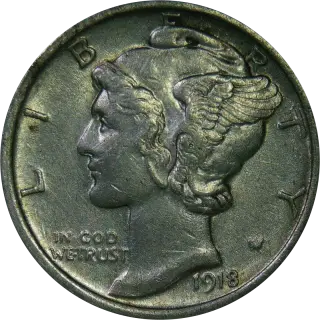
About selling coins, paper currency and bullion to us.
What photos should I send?
Clear photos help us understand what you have. Please send:
- Both sides of every coin or note.
- Good, even light with no glare, and the item in sharp focus.
- A plain, uncluttered background.
- Close-ups of the date and mintmark on coins.
- For loose silver coins, one photo of the edges (a short stack is fine).
- Leave coins in their albums, flips, holders and Mint packaging, and photograph them that way. Don't open rolls; photograph the ends. Hold loose coins by their edges.
- For graded coins and notes: the front and back of the holder label, including the certification number.
- For bars and rounds: the stamped weight and purity.
- For paper money: both sides, with the whole note in the frame and the serial numbers readable.
- Your town and a short description of what you have.
Do I have to sell if I send photos?
No. Sending photos doesn't commit you to sell, and you can turn down any offer.
Should I mail my coins?
No. Please don't mail items to us. Start with photos. We never ask you to ship items or pay anything up front.
Do you pay cash?
Yes. We pay cash. Offers are made after inspection, and you can turn down any offer.
Looking for a free coin appraisal?
Send photos and we'll talk it over, free. If it makes sense to go further, we'll arrange a time and place to see the items in person. Offers are made after inspection. That's an offer to buy, not a written appraisal for insurance or an estate.
Our guide, Where to get coins valued, explains the difference.
Can you come to me for an estate or large collection?
Yes. For estates and large collections, we can come to you. Start by sending photos and telling us a little about what you have.
Do you buy whole collections?
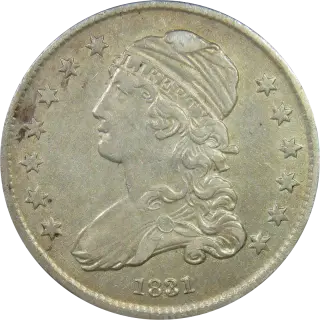
Yes. We're glad to review whole collections as well as individual pieces, including inherited collections, coin albums and folders, rolls, and proof and mint sets.
Should I take coins out of albums, holders or rolls?
No. Leave everything as it is and photograph it that way. Taking coins out can scratch them, and original holders and rolls can matter to collectors.
Don't open rolls. Photograph the ends instead.
If you need to move a coin, hold it by the edges over a soft towel. Fingerprints on the faces can leave permanent marks, especially on proof and uncirculated coins.
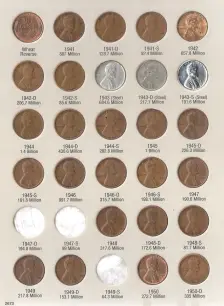
One panel of a Lincoln cent folder, 1941 to 1950-D
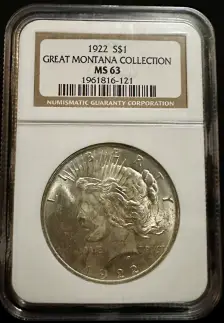
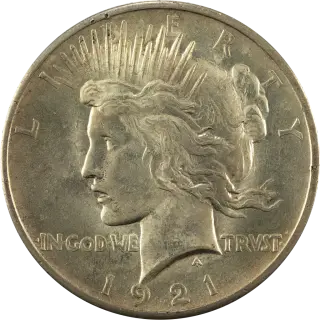
1922 Peace dollar in a grading-service holder
How can I tell if a coin is silver?
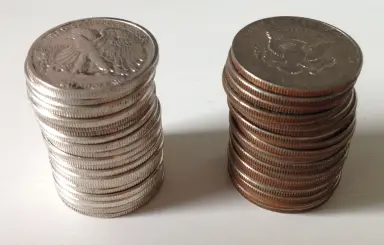
Silver half dollars (left) and clad half dollars (right), edge on
Photo: BrayLockBoy, CC BY-SA 4.0 (cropped)
Check the date, then look at the edge. A 90% silver coin has a solid silver-colored edge. Clad dimes and quarters (1965 on) and clad half dollars (1971 on) show a copper stripe down the middle of the edge. A 40% silver Kennedy half (1965–1970) shows a thin gray center line, not a copper stripe. Nickels and pennies have no stripe: only 1942–1945 nickels with a large mintmark above Monticello are silver, and no U.S. penny is.
These are silver:
- U.S. dimes, quarters and half dollars dated 1964 or earlier (90% silver).
- Kennedy half dollars dated 1965 to 1970 (40% silver).
- Jefferson nickels dated 1942 to 1945 with a large mintmark above Monticello (35% silver).
These are not silver:
- 1943 steel pennies.
- Pennies, and nickels other than the 1942–1945 wartime nickels, whatever the date. Older ones, like Indian Head and wheat pennies and Buffalo nickels, can still be collectible: send photos.
- Golden dollars.
- Susan B. Anthony dollars (none were made in silver), and Eisenhower dollars from circulation.
- Dimes and quarters dated 1965 or later, and half dollars dated 1971 or later, from circulation.
- “Silver dollar” medallions sold on TV, which are often only silver-plated and are not U.S. Mint coins.
Rare exception: a dime or quarter dated 1965 or later, or a half dollar dated 1971 or later, that came from circulation with no copper stripe, or a 1964 dime, quarter or half dollar with one, may be a valuable mint error. Send photos.
Do you buy old paper money?
Yes. We buy large-size notes, blue-seal silver certificates, red seal notes, star notes, National Bank Notes and other older U.S. currency.
Please leave notes as they are. Don't flatten, press, wash or tape them.
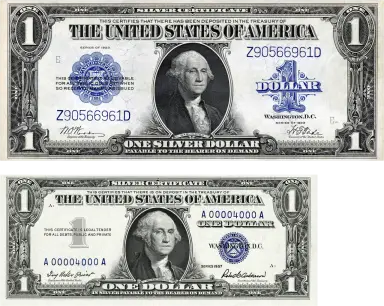
A large-size note above a small-size note at the same scale: Series of 1923 and Series 1957 $1 silver certificates
Image: National Numismatic Collection, National Museum of American History, Smithsonian Institution; scans by Godot13 (second scan), CC BY-SA 4.0 (two scans cropped and set together)
Why shouldn't I clean my coins before you see them?
Cleaning can't be undone. Rubbing, polishing or dipping leaves changes on a coin's surface that experienced graders can see.
Major grading services typically give a cleaned coin a "details" grade instead of a regular numeric grade, and cleaning can reduce a coin's value to collectors.
Please leave coins as they are. The same goes for paper money: don't flatten, press, wash or tape notes.
What's the difference between silver melt value and collectible value?
Melt value is what the silver in a coin is worth at the current spot price: the coin's fine silver weight multiplied by the spot price per ounce.
Collectible value is what collectors will pay for the coin itself. It depends on things like the date and mintmark, how many were made, condition, and demand.
Common, worn silver coins are usually valued mainly on their silver content. Scarce dates, high grades and errors can be worth more than their silver to collectors, so we review those individually.
Is the silver and gold calculator an offer?
No. The calculator gives an estimate based on silver or gold content and current pricing. Any offer is subject to in-person inspection.
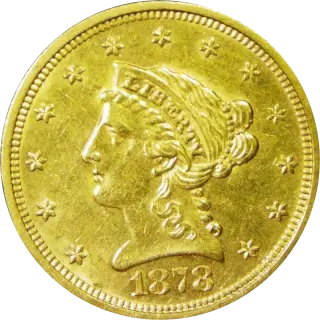
Rare, graded and key-date coins, many Morgan and Peace dollars and many older U.S. gold coins may be worth more than their silver or gold content, so send photos and we'll review them individually.
Do you have a store I can visit?
We don’t list a public storefront. In-person meetings are arranged after we’ve talked about your items.
What areas do you serve?
We're based in Rockmart, Georgia, and work with sellers across Polk, Paulding, Bartow, Floyd, Haralson, Cobb and Cherokee counties and nearby towns: Aragon, Cedartown, Taylorsville, Dallas, Hiram, Cartersville, Emerson, Rome, Villa Rica, Douglasville, Powder Springs, Carrollton, Acworth, Kennesaw, Marietta, Woodstock and Canton.
Who can sell?
Sellers must be 18 or older and should be ready to show a valid government-issued photo ID.
Do you sell coins?
Yes. We sell to collectors through our eBay store.
Shop our eBay store (opens eBay) · See our eBay seller feedback (opens eBay)
How do I get in touch?
Send photos of both sides of each item, any grading labels, your town and a short description with our form. It comes straight to us, and you don’t need an account.
Prefer Facebook? Open our Facebook Page and tap Message or Send Message (Facebook may ask you to log in).
Or write to contact@beaubecoins.com. You can attach photos to an email.
Prefer to talk first? Call (678) 707-9400 during business hours.


Ready to show us what you have?

I'm Jonathan. Your photos and messages come straight to me. More about us